₹475
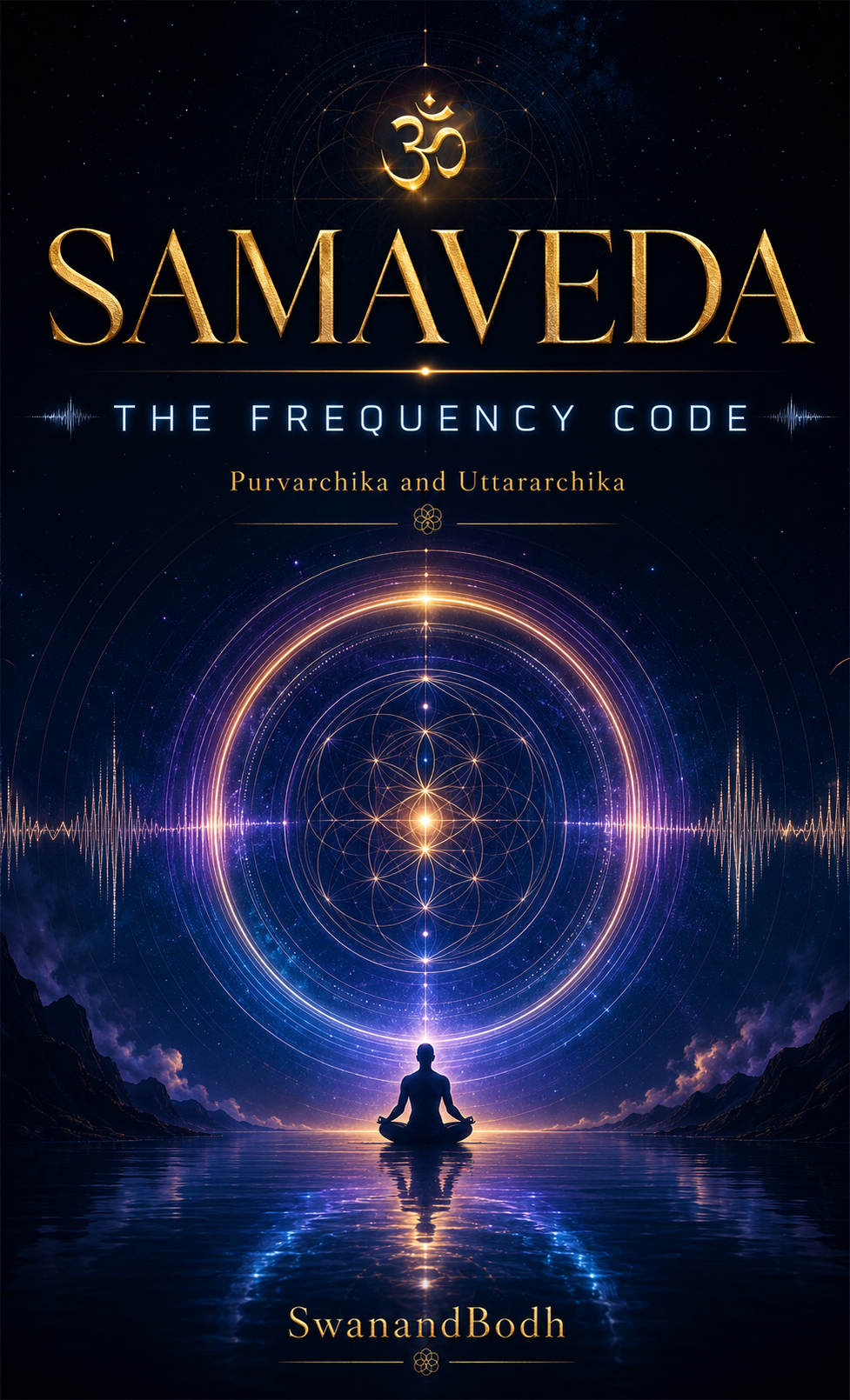
Samaveda – The Frequency Code explores the Samaveda's tradition of chant, melody, and sound — a study-based look at its symbolic framing as a 'Frequency Code' for today's reader.
Availability:
In Stock Pages: 158Choose Your Edition:
Also Available On:
The Samaveda is the Veda of melody — many of its verses are drawn from the Rigveda but set to chant, making it central to India's tradition of sacred sound and musical recitation.
"Samaveda – The Frequency Code" explores this tradition of chant and sound in a study-based, accessible way — using the word "frequency" as a symbolic and interpretative term for rhythm, resonance, and pattern, not as a scientific or acoustic claim (see our disclaimer for more on this).
Get a free preview of a few pages before you buy. Read Sample
Note: "Frequency Code" is used in a symbolic, educational, interpretative sense, not as a scientific or acoustic claim. Read our full disclaimer.
Vivek Bhosale
The idea behind this book immediately caught my attention. Sound and the Samaveda are topics I had never really explored before, so the book gave me a completely new area to think about. The writing is approachable and doesn't make the subject unnecessarily technical.
Musician, MumbaiRadhika Patil
The way this book explores the connection between the Samaveda and sound made for a genuinely interesting read. A few concepts felt unfamiliar at first, but the context becomes clear as you go. Overall, a distinctive reading experience.
Reader, PuneNilesh Pawar
I enjoyed the subject more than I expected. The book looks at sound and rhythm from a perspective that goes beyond everyday music. It made me curious about the role of chanting and sound in the broader Vedic tradition.
Software Engineer, NashikAishwarya More
This is probably one of the more unusual books I have read on Vedic literature. The focus on frequency and sound gives it a distinct identity. I liked the modern style of presentation and the questions it raises along the way.
Student, ThaneRahul Deshmukh
I particularly enjoyed understanding the Samaveda through the lens of music and chanting. The book explains its concepts without becoming overly technical. If you have an interest in Indian music or ancient traditions, you are likely to find this book engaging.
Teacher, AurangabadSonal Jadhav
I came across this book while looking for something related to Indian music traditions. It turned out to be much broader than I expected. The connection between sound, rhythm and the Samaveda is presented in an interesting way.
HR Professional, MumbaiChaitanya Kulkarni
The book has a very distinctive theme. Rather than giving a general overview of the Samaveda, it focuses on an aspect that makes you stop and think about sound differently. I found that approach quite refreshing.
Researcher, PuneMrunal Joshi
I really liked the overall concept of the book. Certain sections invite you to compare the ideas with your own everyday experience of sound and music. Since the subject itself is unfamiliar, a sense of curiosity stays with you throughout the reading.
Homemaker, NagpurDarshan Patil
An engaging read with a subject that feels both ancient and surprisingly contemporary. The book doesn't require you to have a background in Vedic studies to appreciate the basic ideas. I liked the fact that it encouraged me to explore the Samaveda beyond what I already knew.
Reader, KolhapurKavya Shinde
This book made me curious about how sound was understood in older Indian traditions. The presentation is clean and the topic itself keeps the reader interested. I would describe it as a reflective read rather than a conventional informational book.
Graphic Designer, Mumbai